Your Impact: Eight New Defibrillators Saving Lives Every Day
Published Monday, February 23, 2026
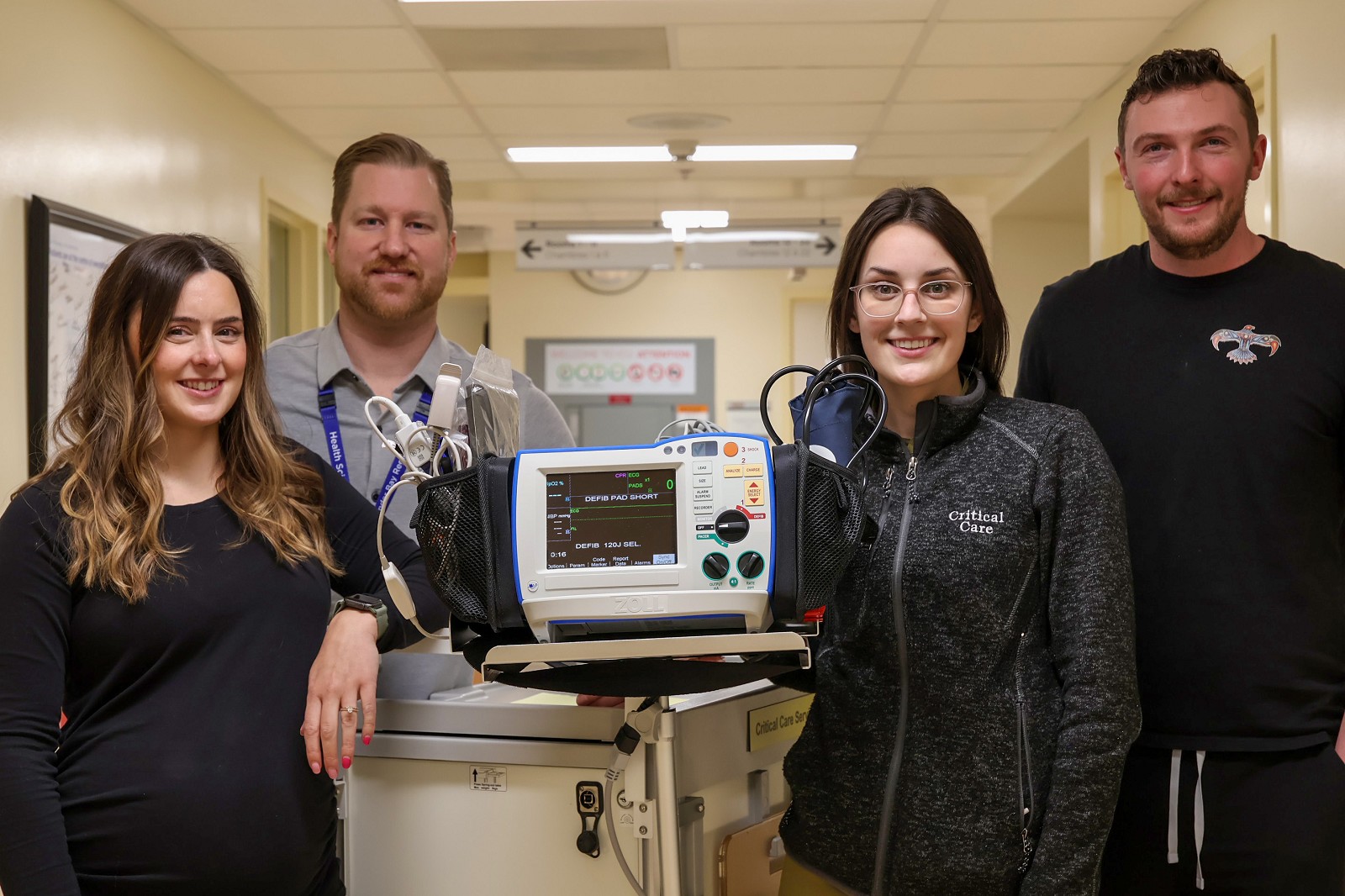
(L-R) Emma MacKenzie, Clinical Nurse Specialist; Peter Hayes, Clinical Nurse Specialist; Sara Dygun, Registered Nurse; and Trevor Andraychak, Registered Nurse, with one of eight new defibrillators at Thunder Bay Regional Health Sciences Centre, made possible through donor support.
When a heart stops, seconds count.
That's why it's so important to ensure the Thunder Bay Regional Health Sciences Centre has defibrillators throughout the Hospital so one is always close at hand. It's especially true in areas where patients are most critical including the Emergency Department, Cardiac Catheterization (Cath) Lab, and ICU. Almost every day at our Hospital, one or more patients require the use of a defibrillator.
“Time is of the essence,” said Peter Hayes, Clinical Nurse Specialist Emergency & Trauma Services in the Emergency Department. “Early defibrillation improves the chance of survival. Using up valuable time retrieving a defibrillator when a patient really needs one can be the difference between life and death.”
The Hospital now has eight new defibrillators, thanks to your support of the Thunder Bay Regional Health Sciences Foundation. Your donations, participation in Foundation events, and purchase of Thunder Bay 50/50 tickets helped purchase this critical equipment, ensuring staff have the tools they need to provide life-saving care.
We've all seen defibrillators on TV. Someone puts two paddles onto the patient's chest, yells “Clear!”, and shocks the heart. During this stage of a cardiac arrest or other heart condition, the heart beats irregularly. The defibrillator delivers an electrical shock in an effort to correct the patient's rhythm.
“It's an essential piece of equipment that is used daily,” said Emma MacKenzie, Clinical Nurse Specialist - Trauma: Critical Care & Neurosurgical Services at the Hospital. “High-quality CPR is always essential, but the defibrillator can reset the cardiac rhythm.”
The ICU, which treats the most critically ill patients, has several defibrillators on the unit. This includes on the Medical Emergency Teams (MET) crash cart for when a patient elsewhere in the Hospital needs potentially life-saving care. The Emergency Department also maintains many defibrillators including one beside each stretcher in the trauma and resuscitation bays, and one on each of their mobile crash carts used throughout the department.
Having the defibrillator in those life-or-death moments is crucial. But today's modern defibrillators in the hands of skilled healthcare professionals also provide patients with a range of other urgent care services.
For example, defibrillators can also be used to treat heart arrhythmias. An arrhythmia is a serious condition when the heart beats too quickly, too slowly, or irregularly. These symptoms are caused by problems with the heart's electrical system. The defibrillator can provide different forms of electricity including pacing, cardioversion, and defibrillation. For example, cardioversion helps reset the heart rhythm when the heart may be beating too fast or irregularly.
“The MET team can use the machine to monitor oxygen levels, blood pressure, and other vital signs while they're treating the patient without needing a separate monitor,” MacKenzie said. “The other big difference is that we can see the cardiac rhythm, not just the heart rate.”
Thanks to your generosity, the Hospital now has eight new models to help save the most critical patients in emergency situations! Find out more about how your donations, event participation, and Thunder Bay 50/50 purchases impact patients' lives every day at:
healthsciencesfoundation.ca/news
Article By: Graham Strong