“Living Afterwards”
Published Monday, November 2, 2026
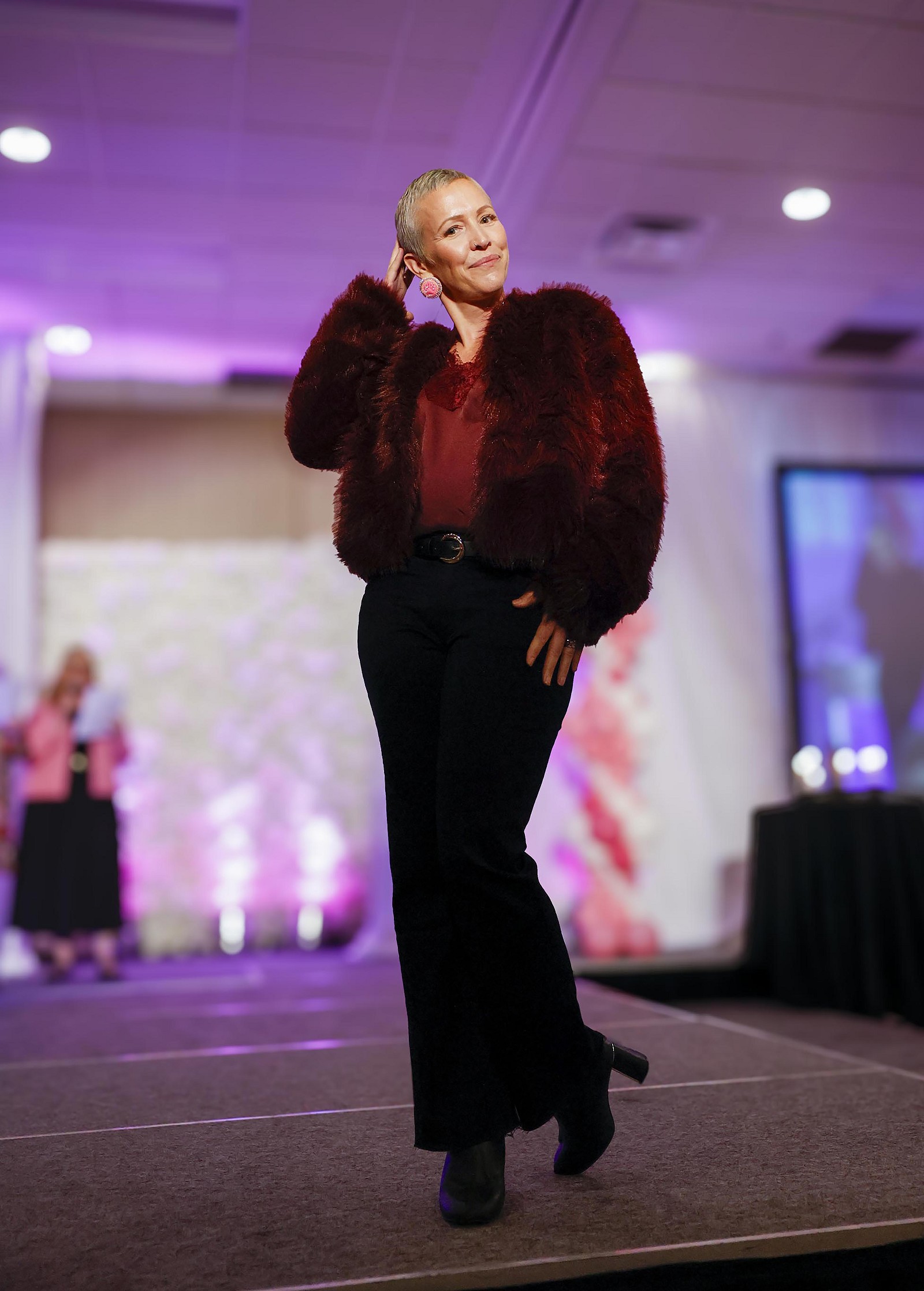
Breast Cancer Survivor Ashley Aitken Talks about What Life is Like after Active Treatment Stops
“Breast cancer survivor” brings many people a swirl of emotions: hope, loss, fear, life-altering change, resilience.
For Ashley Aitken, it's a badge of pride.
“My world turned upside down waiting those six weeks for my test results,” Ashley said. She got her breast cancer diagnosis on her youngest son's fourth birthday. “One of the hardest things I realized is that we would have to tell our kids. What would I tell them? How would they react?
“My heart sunk even further when I sat the older two down. They looked so excited. They thought I was going to tell them I was pregnant.”
Ashley said hearing that she had breast cancer her hit her harder than she expected.
“Even though I already knew in my heart what the results would be, getting the confirmation pushed me into this vague, foggy nether land,” she said. “I spent days lying in my bed, falling apart when the kids were in school. Thinking about all the things I hadn't done with my life, the special occasions I'd miss, and not being able to see my kids grow up.”
Ashley had multiple tumours, and the cancer had spread to her lymph nodes, which meant chemotherapy before surgery. Not only was her world falling apart, her body was falling apart, too.
“The shower is where it would always hit the hardest,” Ashley said. “Day after day, clumps upon clumps of my long blonde hair circled the drain.”
When the day for her double mastectomy with immediate reconstruction and lymph node removal came, her body had had enough.
“I coded three times in the recovery bay. This strong and resilient body had finally met its match,” Ashley said. “This was by far the hardest part of my whole cancer ordeal. The pain, the drains, the incisions, and the realization that my body would never again be the same.
“After the surgery, I lost all sense of what it meant to be me. It was a bizarre feeling. I still can't quite pinpoint it, but I knew I'd changed.”
Ashley fought back. A friend told her about the Tbaytel Luncheon of Hope in October 2025 and the planned runway event. She was in.
“It gave me the opportunity to show my resilience, strength, and determination as a survivor in my most vulnerable state. I strutted down that runway with my barely there hair, feeling all the feels. It was a liberating experience.”
Radiation therapy came next, just six weeks after surgery. Her last cancer treatment was November 19, 2025. Recovery was slow for Ashley, but it came. Five months later on April 16, 2026, Ashley told her story at the Thunder Bay Regional Health Sciences Foundation's Chase the Case presented by Doane Grant Thornton.
Today, almost a year after her last radiation treatment, life has changed quite a bit for Ashley. She still takes medication, but other than that, she's doing everything she can to put her gruelling ordeal behind her.
“It's been a ride – that's one way to put it, for sure,” Ashley said. “But it's still a struggle.”
That includes what she calls “unseen struggles,” things that aren't talked about so much after active treatment is over. One she is working on right now is trying to find her way back to a normal life.
“I just went back to work for the first time in almost two years. I have to use my brain again, and my brain has been a little bit sleepy over the last little bit.”
Just before going back to work, Ashley travelled with the local Dragon Boat team made up of breast cancer survivors. Thirty-two women – competitors and supporters – went to France to race and take in the sights. Ashley checked off a huge box on her global bucket list: visiting the lavender fields in south of France's Aix-en-Provence.
But what really made the trip special was the camaraderie among the women – the only ones who can know what being a breast cancer survivor truly means.
“If I didn't have them, I'd feel pretty lost right now,” she said.
In turn, Ashley found that many people – breast cancer patients or loved ones of patients – now seek her out for support, too.
“Since doing Chase the Case and being more open about my breast cancer, I've had people approach me about my experience and ask my advice. That has been great – I feel like I'm giving back and supporting other people who are going through it.”
It's one of many ways that Ashley's journey is still ongoing.
“It's so strange in a way,” Ashley said. “You don't really know where the line between breast cancer patient ends and breast cancer survivor begins. Right now, I'm like, ‘Okay, I got through that. I survived it, and I want to get to back to some kind of a normal life.'
“Now, here I am, living afterwards.”
Early detection saves lives. If you are a woman between 40-74, talk to your healthcare provider about booking a mammogram or self-refer to the Ontario Breast Screening Program (OBSP) at:
search.caredove.com/org/service/33783/book
Article by Graham Strong